The Death of Originality or the Birth of Infinite Creativity?
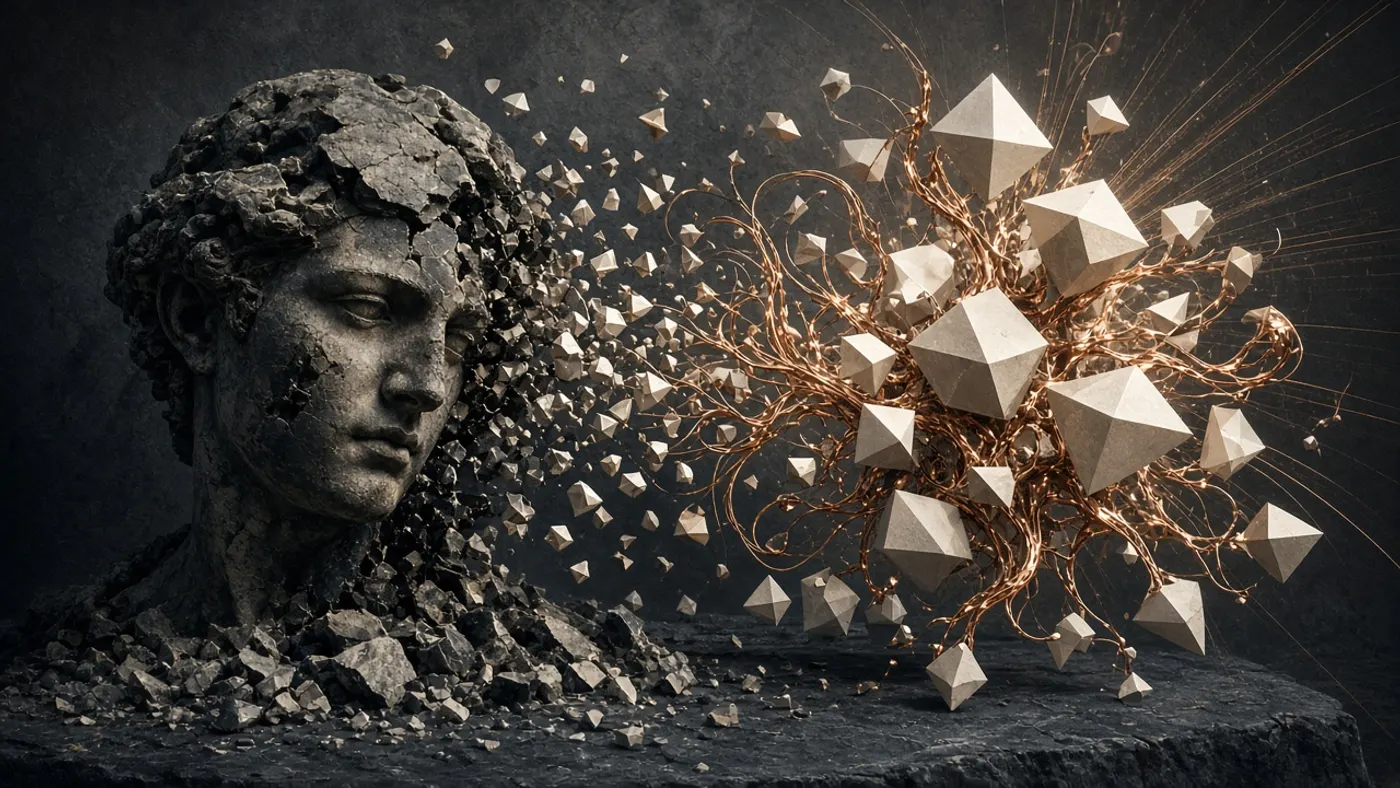
The End of “Original” as We Knew It
For centuries, originality was the measure of genius. To be creative meant to invent something no one had seen before - to surprise, provoke, and redefine the familiar.
But today, that definition is being rewritten.
AI models can now compose symphonies, design logos, write screenplays, and generate photo-realistic worlds in seconds. Every prompt, every output, feels new. Yet paradoxically, everything they produce comes from what already exists - billions of images, phrases, and sounds collected from human culture.
So, if creation now means recombining what’s already known, has originality truly died - or just changed its form?
The Myth of Pure Originality
Even before AI, nothing was ever entirely original. Shakespeare borrowed plots. Picasso reinterpreted African art. Steve Jobs quoted others as saying, “Good artists copy, great artists steal.”
Human creativity has always been collaborative theft - a mosaic of references, influences, and reinvention. What AI does is simply make that process visible at scale.
The difference is speed. Machines don’t dream slowly. They don’t wrestle with doubt. They remix the world at the pace of computation.
And that speed makes us question what creativity truly means.
The Rise of Infinite Creativity
Instead of mourning originality, some argue we’re entering an era of infinite creativity.
AI gives us the ability to explore every version of an idea. A writer can generate fifty story directions. A designer can visualize a hundred styles. A filmmaker can simulate worlds that once required millions in production.

The bottleneck is no longer resources. It's imagination.
Technology doesn’t eliminate originality - it amplifies it. The tools may be shared, but what we choose to express with them is still deeply personal.
The Human Fingerprint Still Matters
The one thing AI cannot replicate is intention. A machine can generate, but it cannot want.
It doesn’t crave meaning, beauty, or validation. It doesn’t understand heartbreak, risk, or the need to say something that no one else can.
That inner friction - the human impulse to make sense of the world - is still the beating heart of creativity.
When artists use AI, the originality doesn’t vanish; it migrates. It moves from the artifact to the perspective. The new originality is not in what we make, but in why we make it.
Creativity After Ownership
Another shift is the death of exclusivity. When anyone can generate beautiful things instantly, value moves from creation to curation.
The question isn’t “Can you make something?” It’s “Can you make something that matters?”
Originality in the AI era is about discernment - the ability to choose what to keep, what to discard, and what to elevate.
Artists will no longer be gatekeepers of talent; they’ll be conductors of chaos, orchestrating infinite possibilities into something emotionally coherent.
The Emotional Renaissance
What looks like the death of originality might actually be the rebirth of emotional creativity.
In a world overflowing with perfect outputs, imperfection will become valuable again. Raw voice recordings, unfiltered moments, handwritten text, and mistakes will stand out.
We’re already seeing it - creators intentionally adding noise, film grain, and human flaws to remind audiences that a soul is still present.
AI didn’t kill authenticity. It forced us to redefine it.
The Future: Originality as Collaboration
The next generation of creativity won’t be human versus machine - it will be human through machine.
Just as the camera didn’t kill painting, and Photoshop didn’t end design, AI won’t end creativity. It will multiply it.
Every artist, brand, and thinker will become part of a global creative loop - feeding ideas into systems that echo them back in unexpected ways.
Originality won’t disappear. It will become a shared consciousness - a collaboration between memory, machine, and human emotion.
Conclusion
Maybe originality, as we defined it, was always too narrow. Maybe we confused isolation with innovation.
AI isn’t the death of creativity - it’s the mirror forcing us to confront what creativity truly is.
The birth of infinite creativity doesn’t mean machines replace us. It means they remind us what only humans can still do: to care, to feel, to mean it.
Ready to Transform Your Marketing, Branding & Advertising Strategy?
Marketing - marketing strategies that drive real connections and lasting impact.
Advertisement - bold ideas and unforgettable campaigns powered by intelligent automation.
Ad Tech - data-driven power for every campaign with advanced tracking and optimization.
Branding - your story, instantly distinct and emotionally true through enhanced creativity.
Ujjwal Mahar
AI Automation Expert